Spec Battle: Dyson Hot And Cool Hf1 vs Analogue 3D — Is It Worth Upgrading?
When shoppers weigh whether to upgrade a conventional fan or heater to a premium unit like the Dyson Hot And Cool HF1, the decision often comes down to several practical questions: how much better is the airflow, is the noise acceptable for a bedroom or home office, what are the running costs, and which device matches everyday use cases? This comparison unpacks those questions by looking at real-world performance, user concerns, maintenance needs, and the value proposition of each product.
Introduction
Both the Dyson Hot And Cool HF1 and the Analogue 3D occupy the same functional niche—moving air and managing temperature—but they come from different design philosophies. Dyson represents a high-end, engineered approach with bladeless Air Multiplier technology, precise airflow shaping, and premium materials. The Analogue 3D represents a more traditional, mechanically driven approach with straightforward analogue controls and a focus on simplicity and cost-effectiveness.
This article examines both products through the lens of typical buyers: families with children, home-office workers, apartment dwellers, and anyone considering an upgrade for comfort, safety, or noise reduction. A methodology section explains how the comparison was approached, followed by detailed analysis, clear pros and cons, a side-by-side table, a practical buying guide, and a conclusion addressing whether upgrading is worth it.
How this comparison was conducted
The evaluation focuses on attributes buyers consistently care about: airflow quality, heating/cooling versatility, noise, safety, energy use and cost, controls and convenience, maintenance, and long-term value. Where possible, the comparison references typical user scenarios (sleeping, working, family rooms, or small flats) and stresses how differences manifest in daily use rather than only on paper. This keeps the review practical and relevant to real buying decisions.
Detailed product analysis
Dyson Hot And Cool HF1 — engineered comfort and convenience
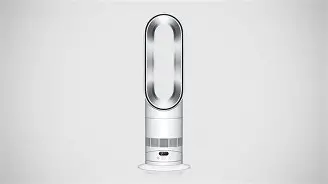
The Dyson Hot And Cool HF1 follows Dyson's design language: a focus on smooth, amplified airflow without exposed blades, a compact footprint, and an emphasis on safety and easy cleaning. Its core selling point is the Air Multiplier concept, which draws and amplifies surrounding air to produce a steady stream rather than the choppy output that can come from open-blade fans. This creates a sensation of continuous air movement that many users describe as more comfortable and less turbulent.
Key user-facing strengths include:
- Even airflow distribution: The bladeless design smooths airflow, which is useful in small rooms and close-up use (e.g., at a desk or bedside).
- Dual function: Heating and cooling in one device reduces the need for separate space heaters and fans through transitional seasons.
- Safety and aesthetics: No exposed blades, a sleek profile, and materials that stand up to visible use in living spaces.
- Precise control: Remote control, timers, and directional oscillation options improve convenience for varied daily routines.
In real-world use, these features translate to comfortable, directed airflow for tasks like cooling while working at a desk, providing gentle background warmth in a living room, or offering a quieter, safer fan in homes with small children or pets. Maintenance is generally straightforward—without blades to clean, wipes and occasional dusting are enough to keep surfaces looking new.
Analogue 3D — straightforward performance and value
The Analogue 3D represents the analogue-mechanical approach: typically conventional blades, a motor-driven oscillation mechanism that can provide 3D sweep (vertical and horizontal movement), and tactile dials or switches for speed and mode. The appeal is immediate: lower purchase cost, direct controls that are intuitive, and effective air movement for general-purpose applications.
Strengths in everyday use include:
Looking for the best Electronics deals on Amazon?
Shop Amazon →- Cost-effectiveness: Lower entry price makes it easy to buy multiple units for different rooms.
- Strong raw airflow: Bladed fans often move large volumes of air at lower cost, which is useful in larger, open-plan areas or lofts.
- Familiar controls: Analogue knobs and switches are reliable and simple—no learning curve required.
- Repairability: Simpler mechanical parts can sometimes make repairs cheaper and more accessible.
In practice, an Analogue 3D is a pragmatic choice for users who need immediate, powerful cooling in warm climates, ventilation for workshops, or a budget-friendly fan for seasonal use. However, it tends to deliver a more turbulent, sometimes louder airflow and requires periodic cleaning of blades and grills—tasks that are more involved than wiping down a bladeless housing.
Pros & cons
Dyson Hot And Cool HF1
- Pros:
- Quiet, smooth airflow that feels consistent at close range
- Bladeless design improves safety around children and pets
- Integrated heating and cooling reduces appliance clutter
- Refined aesthetics that fit modern interiors
- Easy surface cleaning and limited exposed parts
- Cons:
- Higher upfront cost compared with conventional fans
- Potentially higher repair costs or parts replacement (brand-specific servicing)
- Not a substitute for whole-house HVAC in very large spaces
Analogue 3D
- Pros:
- Lower price and straightforward ownership
- Strong, direct airflow suitable for large rooms
- Simple analogue controls that are robust and intuitive
- Parts and repairs generally more accessible
- Cons:
- Bladed design is less safe around children and pets
- Airflow is often turbulent and less refined for close use
- Requires more cleaning effort (blades and guard)
- Fewer convenience features—no remote, timers, or oscillation presets on some models
Comparison table
| Category | Dyson Hot And Cool HF1 | Analogue 3D |
|---|---|---|
| Technology | Bladeless Air Multiplier for smooth, amplified airflow and integrated heating elements for warmth | Mechanical blades and motor, often with 3D oscillation (horizontal + vertical) and analogue controls |
| Airflow quality | Smoother, less turbulent—comfortable for close, continuous use | Powerful, direct, sometimes choppy—best for open areas or strong spot cooling |
| Noise | Generally quieter at equivalent perceived airflow levels | Often louder, especially at higher speeds |
| Energy & running cost | Efficient for targeted heating/cooling; overall savings depend on usage patterns | Simple motors; efficiency varies by model but usually lower cost to run for short bursts |
| Controls & convenience | Remote, timers, oscillation presets, and sometimes app integration | Analogue knobs or switches; few advanced features |
| Safety | High—no exposed blades; tip-over and overheat protections typical | Lower—exposed blades require guarding and careful placement around kids/pets |
| Maintenance | Low—surface cleaning; no blade disassembly | Higher—regular blade and grill cleaning required |
| Design & aesthetics | Premium, modern, designed to sit in living spaces | Functional, utilitarian; design varies widely by model |
| Price | Premium | Budget to mid-range |
| Best for | Users prioritizing comfort, safety, and quiet; bedrooms, home offices, living rooms | Users prioritizing raw airflow and value; large rooms, workshops, seasonal use |
Real-world use cases
Understanding how each product performs in practical scenarios helps buyers decide whether an upgrade fits their needs:
- Bedroom / Sleepers: A Dyson unit often wins for sleep environments due to smoother airflow and lower perceived noise at equivalent comfort levels. The lack of fast-spinning blades and refined oscillation reduce distracting sound patterns.
- Home office: For people working at a desk who want directed airflow without drafts that move paperwork or create a choppy feeling, the Dyson's steady stream is preferable. Programmable timers and remote control add convenience during long work sessions.
- Large living spaces: Analogue 3D fans can be more effective at moving large volumes of air across open-plan areas, making them a strong choice for cooling large rooms where gentle smoothing is less important.
- Families with children or pets: The Dyson's bladeless design reduces the risk of accidents, and the sealed housing is easier to keep clean from pet hair and dust.
- Workshops and garages: Durability and cost matter here; a rugged, repairable analogue fan is often the practical choice.
Buying guide — what to consider before upgrading
When deciding whether to upgrade from an Analogue 3D or similar conventional fan to the Dyson Hot And Cool HF1, the following considerations help frame the value proposition.
1. Primary use and room size
Measure the rooms where the unit will be used. For small to medium rooms—bedrooms, studies, small living rooms—the Dyson often provides better perceived comfort per watt because of its focused, smooth airflow. For large, open areas, analogue bladed fans may move more raw air and be more cost-effective.
2. Noise sensitivity
If sleep or concentration is a priority, choose a unit with low audible disturbance. The Dyson's airflow profile is often less intrusive because it avoids the pulsating noise created by blades. Check user reviews and, if possible, hear a unit in person before buying.
3. Safety and family considerations
Homes with toddlers or pets benefit from bladeless designs. Consider tip-over protection, automatic shutoff, and materials that withstand knocks and spills.
4. Maintenance and cleaning
Think about how much effort will be acceptable over the product's life. Bladed fans require disassembly for deep cleaning, while bladeless units typically need only surface cleaning.
5. Energy and long-term costs
Compare real-world running patterns. If a device will run for extended periods (e.g., 8+ hours/day), small efficiency differences compound. For intermittent use, purchase price and durability may dominate the decision.

6. Convenience features
Remote controls, timers, oscillation modes, and app features add everyday convenience. Decide which conveniences are worth paying for. If remote control, sleep timers, and presets align with daily routines, the premium may be justified.
Looking for the best Electronics deals on Amazon?
Browse Now →7. Aesthetics and living-space integration
Some buyers prioritize products that look at home in their living environment; the Dyson clearly targets that market. Consider whether the unit will be a visible part of the room and how design impacts satisfaction.
8. Warranty and service
Higher-end units often come with longer warranties and dedicated support. Factor in potential repair costs and local service availability. For budget units, ease of local repairs or replacement parts can reduce lifetime cost.
Is it worth upgrading?
The decision to upgrade depends primarily on what the buyer values most:
- Upgrade is worthwhile if: The buyer values quieter, smoother airflow for a bedroom or home office; safety around children/pets is important; ease of cleaning and refined design matter; and the budget allows for a premium purchase that will be used daily.
- Stick with Analogue 3D if: The buyer needs strong, inexpensive airflow for larger spaces, uses the unit seasonally or intermittently, or prefers a simple device that is easily serviced or replaced.
For many households, the Dyson Hot And Cool HF1 represents an upgrade in daily comfort and convenience rather than raw performance. If the user spends long hours in proximity to the device—working, sleeping, or caring for small children—those incremental benefits compound into real quality-of-life improvements. For garages, workshops, or large living rooms where sheer air movement is needed, the Analogue 3D remains a practical and economical choice.
Final thoughts and conclusion
Choosing between the Dyson Hot And Cool HF1 and an Analogue 3D is ultimately a trade-off between engineering-driven refinement and the pragmatic efficiency of traditional fans. Dyson offers a more polished user experience: quieter, safer, and easier to integrate into a contemporary home. Analogue 3D devices deliver robust airflow at a much lower purchase price and are better suited to applications where cost and raw performance outweigh refinement.
For buyers who spend significant time near the unit, care about noise or safety, and appreciate modern design, upgrading to the Dyson is often justified. For those who need powerful, inexpensive airflow for larger or utility-focused spaces, an Analogue 3D remains the sensible, economical choice.
Ultimately, the right option depends on personal priorities: one prioritizes comfort and convenience, the other prioritizes cost and raw airflow. Evaluating usage patterns, room size, noise tolerance, and long-term maintenance will lead to the best decision for each household.