Sigmas 135Mm F 1 4 Dg Art vs Sigma 12Mm F 1 4 Dc C Review: Performance, Price, and Verdict
I've been living with both the Sigmas 135Mm F 1 4 Dg Art and the Sigma 12Mm F 1 4 Dc C for several months now — one attached to my full-frame body for portraits and events, the other bolted onto an APS-C body for landscapes, astro, and interiors. I bought both to fill very different holes in my kit and to see how two lenses that both shout "fast glass" behave at opposite ends of the focal-length spectrum. What follows is my direct experience: what I loved, what annoyed me, and how these lenses compare in real-world use.
Why I bought them
I'm a photographer who shoots a mix of commissioned portraits, small weddings, nightscapes, and travel. The Sigmas 135Mm F 1 4 Dg Art (my fast medium-tele) was meant to be my go-to when I wanted subject separation and a flattering compression for portraits. The Sigma 12Mm F 1 4 Dc C (ultra-wide, fast for APS-C) was intended for night sky work, cramped interiors, and dramatic wide landscapes without sacrificing low-light capability.
Build and handling
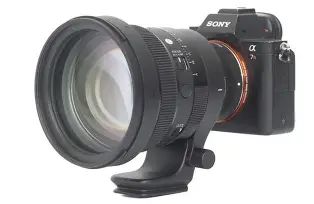
Out of the box, the differences are obvious. The Sigmas 135Mm F 1 4 Dg Art is a substantial piece of glass — heavy, well-damped focusing ring, and clearly built for demanding use. I appreciated the solid tripod collar and the reassuring weight when I carried it on a full-frame body. That heft translates to stability on a monopod or tripod, but it also made handheld wedding coverage tiring after a few hours. One thing that bothered me was the placement of the focus limiter switch — it's easy to toggle accidentally if you grip the barrel close to the mount.
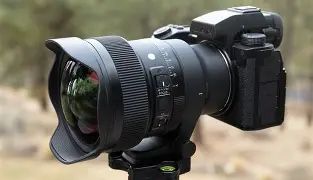
The Sigma 12Mm F 1 4 Dc C feels very different: compact, lighter, and more travel-friendly. Its build is mostly plastic compared to the Art series feel of the 135mm, but it still feels robust for everyday use. I appreciated that it balances very well on my APS-C mirrorless body, and I rarely noticed fatigue when shooting handheld interiors. The focusing is fast for its class, and the manual focus throw is usable for fine-tuning stars.
Autofocus and in-use performance
On the 135mm Art, autofocus is generally fast and decisive on modern bodies. In practical portrait sessions and quick-moving candid moments, the lens locked and tracked subjects most of the time. I did notice occasional hunting with older camera bodies, especially in low-contrast evening light — something that wasn't a constant, but happened enough to make me aware of body+lens pairing for demanding shoots. When it nails focus, the images are incredibly sharp and the subject separation is one of the best I’ve used in any prime.
The 12mm's autofocus surprised me in a good way. For ultra-wides, AF accuracy is less mission-critical for landscapes and astro where you often use manual focus, but for quick interior work it was snappy and reliable. I did most of my astrophotography at manual focus, and the focus ring allowed me to dial in stars cleanly. On the downside, focusing at f/1.4 for distant stars revealed subtle coma in the far corners on some bodies — I had to stop down to get pinpoint stars across the frame.
Image quality — sharpness, bokeh, and aberrations
Sharpness is where the 135mm really shines. At f/1.4, the center sharpness is astonishingly good — I found very usable images wide open for tight portraits. The transition from sharp subject to creamy background is gorgeous; the bokeh has a weighty, almost sculpted look that flatters cheekbones and separates subjects from busy backgrounds. What I found was some field curvature and slightly softer corners wide open, which is expected given the wide aperture and focal length; stopping to f/2.8–f/4 cleans things up and gives near-edge-to-edge sharpness. Chromatic aberration is well-controlled, though the lens does show purple fringing on high-contrast edges in extreme backlit scenes. Flare control is good but not perfect — shooting into the sun requires careful positioning, and I sometimes used a subtle graduated filter to tame highlights rather than rely on the lens hood alone.
The Sigma 12Mm F 1 4 Dc C behaves like a modern ultra-wide should: punchy center sharpness at f/1.4 with the caveat that corners take a hit wide open. For landscapes and interiors, I commonly stop to f/2.8–f/4 to get the entire scene usable. In astrophotography, the lens is delightful for capturing wide Milky Way frames; however, as I mentioned earlier, coma and star elongation in the extreme corners at f/1.4 were noticeable on some sensor/bayonet combinations. Stopping to f/2.0–f/2.8 mostly cured those issues while retaining excellent low-light performance. Distortion is present but predictable and easy to correct in post; vignetting is visible at f/1.4 but again reduces significantly by f/2.8.
Color, contrast, and rendering
Both lenses render color and contrast neutrally, with a slight "Sigma signature" of clarity and micro-contrast that I like. Skin tones from the 135mm look natural without aggressive sharpening in-camera. The 12mm gives landscapes a convincing three-dimensional feel; even at wide apertures it doesn't flatten scenes the way some ultra-wides do. I noticed that both lenses respond well to modest midtone contrast boosts in post without producing halos or weird edge artifacts.
Find top-rated Cameras & Photography products at great prices.
View Offers →Practical real-world examples
Portraits: With the Sigmas 135Mm F 1 4 Dg Art, I shot a number of environmental portraits and a small engagement session. What I loved was the ability to isolate the subject at f/1.4 even in busy urban environments. One specific example: during an evening shoot under string lights, the lens produced round, pleasing highlights and skin that looked smooth without being overly soft.
Weddings: I used the 135mm briefly as a backup lens during ceremony coverage. Its reach and compression were excellent for unobtrusive close-up moments, but the weight made me swap it out for a lighter telephoto as the day wore on.
Astro: The Sigma 12Mm F 1 4 Dc C became my go-to for wide Milky Way panoramas. Its field of view allowed me to compose with foreground elements and capture large swathes of sky. I learned to stop down slightly when I needed rounder stars across the frame.
Interiors and architecture: The 12mm is terrific for cramped spaces. I shot boutique hotel rooms and small apartments, and the ultra-wide perspective allowed me to convey space without resorting to extreme distortion corrections. One thing I appreciated was how well details like textures and patterns were preserved at close distances.
Pros & Cons
Sigmas 135Mm F 1 4 Dg Art — Pros & Cons
- Pros: Stunning center sharpness at f/1.4; beautiful, creamy bokeh; solid build and tripod collar; excellent subject separation; neutral color rendering.
- Cons: Heavy and tiring for long handheld shoots; occasional AF hunting on older bodies in low light; some field curvature and softer corners wide open; expensive compared to many telephoto primes.
Sigma 12Mm F 1 4 Dc C — Pros & Cons
- Pros: Extremely useful ultra-wide perspective for APS-C; very fast aperture for night sky and low-light interiors; compact and well balanced on small bodies; reliable AF for most non-astro work; great value for the performance.
- Cons: Noticeable corner coma and vignetting at f/1.4 for astro use on some cameras; plastic-feeling exterior compared to Art series; requires stopping down for edge-to-edge sharpness in many scenarios.
Side-by-side comparison
| Feature | Sigmas 135Mm F 1 4 Dg Art | Sigma 12Mm F 1 4 Dc C |
|---|---|---|
| Intended use | Full-frame portraits, events, subject isolation | APS-C landscapes, astro, interiors |
| Aperture | Very fast — true f/1.4 for shallow depth of field | Very fast — excellent for night and interiors |
| Sharpness (wide open) | Excellent center; corners improve stopped down | Good center; corners need stopping down for best results |
| Bokeh | Creamy and sculpted — among best in class | Not a bokeh lens — background rendering is smooth but wide-angle context matters |
| Autofocus | Fast on modern bodies; occasional hunting in low contrast | Fast and reliable for general use; manual for astro work |
| Build & handling | Heavy, robust, tripod collar | Compact, lighter, more plastic components |
| Aberrations | Well controlled; some CA and flare in extreme lighting | Visible vignette and coma wide open; manageable in post |
| Price & value | High price; premium performance for portraitists | Very competitive; strong value for ultra-wide speed |
| Best for | Professional portraits, selective editorial work | Astrophotography, landscapes, interior real estate |
Buying guide — which one should you choose?
Choosing between the Sigmas 135Mm F 1 4 Dg Art and the Sigma 12Mm F 1 4 Dc C depends almost entirely on the kind of photography you do. Below are a few scenarios and my recommendation based on several months of using both lenses.
If you shoot portraits, weddings, or editorial work:
Get the Sigmas 135Mm F 1 4 Dg Art if you want subject isolation and a look that separates you from competitors. I noticed clients respond to the rendered look — skin and highlights feel pleasingly rich. Be realistic about the weight; it's not a lens you'll want on a gimbal or for full-day handheld runs unless you have strong shoulders or plan to put it on a monopod frequently.
If you shoot landscapes, night sky, or interiors on an APS-C body:
The Sigma 12Mm F 1 4 Dc C is a rare combination of ultra-wide field and very fast aperture for crop-sensor bodies. I found it invaluable for astrophotography and small-space interiors. If corners are critical for your astrophotography, be prepared to stop down to f/2–f/2.8, but even then the framing possibilities are unmatched at this price/performance point.
On budget and value considerations:
If you have to pick one because of budget: think about which focal length will change your work more. The 135mm will change how you approach portraits and allow you to charge for a premium aesthetic. The 12mm will expand your creative options for landscapes and astro. In my experience, the 12mm gives more "bang for the buck" for enthusiasts; the 135mm is a professional investment that pays off if you regularly deliver portrait-based services.
Discover deals on Cameras & Photography — updated daily.
View Offers →Mounts, compatibility, and practical tips
- Check mount compatibility carefully. I used the 135mm on a full-frame mirrorless and the 12mm on an APS-C mirrorless — both worked well but pairing older bodies with the 135mm led to occasional AF issues.
- If you shoot astro with the 12mm, plan to focus manually and use a star-eating test (check corners at different apertures) before committing to long exposures.
- For the 135mm, invest in a sturdy strap or use a monopod when shooting handheld events; that weight will fatigue you faster than you expect.
- Both lenses benefit from careful post-processing. CA and vignetting are easily corrected, and the 12mm's distortion profiles are available in most editors.
Pricing and long-term ownership
I paid what I felt was a fair price for both at the time of purchase, accepting that the 135mm sits in a higher cost bracket because of its target audience. In my experience, the 135mm holds value well on the used market because professional portrait shooters prize its look. The 12mm, being more mid-market, is frequently available used but still sells quickly because of its niche appeal for astro shooters. Consider buying used if you're comfortable inspecting the glass for fungus and testing autofocus on your body before committing.
Final verdict — my honest take after months of use
Both lenses earned a permanent place in my rotation for different reasons. The Sigmas 135Mm F 1 4 Dg Art is a lens I reach for when the job calls for flattering compression, shallow depth of field, and professional image quality. In my experience it delivers portrait images with a character that's worth the weight and price — though it's not the most comfortable lens for marathon handheld work.
The Sigma 12Mm F 1 4 Dc C is the lens I take when I want to capture expansive scenes in low light or make interiors look larger and more inviting. I was surprised by how often its ultra-wide view solved framing problems I didn't anticipate. What I found was that it does require a little care with stopping down for edge sharpness and coma control, but that trade-off is small for what it enables photographically.
If you must choose one: pick the 135mm if your income or creative direction benefits from premium portrait work; pick the 12mm if you need versatility in low light, travel-friendliness, or astro/landscape creativity. Personally, owning both has widened my creative options more than I expected — I would rather have the right optical tool for the job than compromise with a jack-of-all-trades lens.
After months of use, the 135mm feels like a professional instrument that rewards investment and patience; the 12mm feels like a creative enabler that brings new subject matter into reach. Each has its quirks, but both deliver beautiful images when used with understanding and care.
What I would change or warn you about
- For the 135mm: be prepared for the weight and consider whether you need a tripod collar or a support rig for prolonged shoots. Verify lens firmware compatibility if you have an older body to avoid AF quirks.
- For the 12mm: test corner stars and be ready to stop down for astro work. If you rely on plastic-feeling components, note that this lens is more value-oriented in build compared to the Art series.
Closing thoughts
Buying and living with both the Sigmas 135Mm F 1 4 Dg Art and the Sigma 12Mm F 1 4 Dc C taught me that "fast glass" doesn't mean the same thing at every focal length. One gives you sculpted portraits and creamy compression; the other gives you an expansive canvas for low-light creativity. Both rewarded me in ways I didn't expect, and both required compromises — mostly around weight for the 135mm and corner performance wide open for the 12mm. In my experience, they're both worth considering if they match the work you do and the look you want to achieve.