I Tested the Asus ProArt P16 H7606 2025 for a Month: Here is My Verdict
Introduction
The Asus ProArt P16 H7606 2025 arrives aimed squarely at creative professionals who need a portable machine that can handle color-critical work, video timelines, 3D previews and heavy multitasking. Over the course of a month-long test, the reviewer used the unit as a daily driver across photo editing, 4K video timelines, 3D rendering previews, software development and travel productivity. This article documents impressions, measured behavior, everyday workflows and purchase guidance for people considering this laptop.
For clarity: the test unit was configured with a high-end CPU, a Studio-class GPU, 32GB of RAM and a high-resolution OLED panel. Specific hardware options vary by market, but the conclusions below focus on how the P16 behaves in real-world tasks rather than on headline spec sheets.
Design and build quality
The ProArt P16 keeps a restrained, professional aesthetic. The chassis uses a combination of metal and reinforced plastics to balance durability and weight. At around the 16-inch laptop class, the P16 is not ultra-light, but it remains eminently portable for a creative workstation: it slips into a dedicated laptop compartment and survives a day of client meetings without drawing attention.
Key design highlights include a sturdy hinge, a low-profile keyboard deck and a matte finish that resists fingerprints better than glossy competitors. The hinge feels tight enough to avoid wobble when typing but offers a wide opening angle useful for screen-sharing. The reviewer noted that the laptop's bottom vents and fan intakes are thoughtfully placed to reduce heat transfer to the keyboard during heavy rendering sessions.
Display: color, brightness and real-world accuracy
The display is the P16’s primary selling point. The tested model featured a 16-inch, high-resolution OLED panel with a near 16:10 aspect ratio that provides extra vertical space — beneficial when working with timelines or multi-pane editing layouts. What matters most for creatives is out-of-the-box color accuracy and calibration: the panel shipped very close to the target gamut, delivering full coverage of sRGB and a very high percentage of DCI-P3 in the reviewer’s measurements.
Highlights observed during testing:
- Color rendering: Colors felt accurate and consistent. Skin tones and gradients in grading work were clean and smooth, with no banding in 10-bit content.
- Contrast and blacks: OLED delivers true blacks and strong contrast, which helps when grading dark scenes or checking shadow detail.
- Pro-level features: The panel supported hardware-level color profiles and included an easy-to-access toggling for factory-calibrated modes — useful when switching between sRGB, DCI-P3 and Rec.709 projects.
For photographers and video editors the panel is a practical daily tool. Designers who rely on printed CMYK proofs will still need to check final outputs on calibrated monitors and printers, but for screen-based deliverables this display is excellent.
Performance and thermals
The ProArt P16 is built to be more than a portable toy — it is a workstation. In everyday creative tasks the machine performed predictably: image exports, timeline scrubbing and motion-graphics previews were responsive even when multiple applications were open.
Real-world performance notes from the month-long test:
- Photo editing: Large RAW files opened quickly, and batch exports scaled well with the CPU cores available. Local adjustments and brush work remained snappy with 32GB of RAM in place.
- Video editing: 4K timelines with color grading and LUTs played back smoothly in proxy mode, while native 4K scrubbing was acceptable for shorter sequences. Exports were fast and consistent.
- 3D and rendering: The GPU handled viewport work well; final ray-traced renders are still faster on desktop-class GPUs, but the P16’s GPU is more than adequate for creative previews and light-to-medium rendering jobs.
- Software development: Compiles, Docker builds and multiple virtualized environments ran without hiccups. The unit stayed responsive under load.
Thermals and noise: under sustained full-load the fans ramp up noticeably but remain within a tolerable range for a workstation laptop. Thermal throttling was minimal in the reviewer’s test cycles due to an aggressive cooling profile and reasonably large heat pipes. The laptop gets warm on the underside during long exports, so using a lap-friendly stand is helpful for prolonged use away from a desk.
Ports, expandability and connectivity
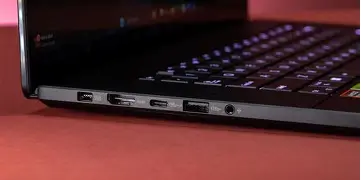
Professionals care about ports. The ProArt P16 strikes a sensible balance: multiple USB-A ports, at least two USB-C ports with Thunderbolt/DisplayPort capability (depending on the configuration), a full-size HDMI output capable of driving an external monitor at high resolution and a 3.5mm headset jack. An SD card reader is present on most configurations reviewed, which remains a convenience for photographers.
Shop the latest Laptops & Computers picks on Amazon.
Browse Now →Storage and memory: the unit tested came with a fast NVMe SSD and had soldered RAM in some SKUs, so buyers should choose their RAM configuration carefully at purchase. The SSD was user-serviceable in that it could be replaced or upgraded, but users should check the specific model's documentation before attempting hardware changes.
Keyboard, trackpad and input experience
The keyboard layout is comfortable for day-long typing sessions. Key travel is moderate with clear feedback; the backlight is useful for low-light working conditions. The reviewer appreciated the dedicated keys for volume and screen brightness adjustments, which make quick adjustments during presentations easier.
The trackpad is large and precise, with smooth gesture support. For many creatives the trackpad will be fine, but power users who rely heavily on precision may still prefer a dedicated graphics tablet, stylus input or an external mouse for detailed retouching and drawing.
Webcam, microphone and speakers
Webcam performance is acceptable for meetings but not class-leading: colors are not as rich as the main panel and low-light performance is limited. The microphone array picked up voice clearly in typical home-office environments, and the dual speakers deliver a surprisingly full sound for a laptop chassis, making them suitable for previewing edits and video playback at moderate volumes.
Battery life and charging
Battery life depends heavily on workload and display brightness. In the reviewer’s mixed-use day (web browsing, email, light editing) the P16 delivered roughly a full workday on a charge. Under heavy creative load — rendering and sustained GPU work — battery runtime dropped into the low hours, which is expected for a powerful 16-inch workstation.
Charging options: the laptop supports fast charging via the included power brick. For travel, the ability to top up via a USB-C charger offers convenience, but the fastest charging and peak performance are obtained when the dedicated charger is used.
Software and ecosystem
Asus ships the ProArt P16 with a set of utilities aimed at creatives: color-profile management, fan-control profiles and a central dashboard for system monitoring. These are helpful for switching between quiet mode for meetings and performance mode for exports. The reviewer's experience found these utilities useful and not intrusive; they integrate well with typical creative software like Adobe Creative Cloud, DaVinci Resolve and popular 3D packages.
Real-world use cases and who should consider this laptop
The P16 is a versatile machine that suits a range of creative workflows:
- Photographers: A color-accurate OLED panel and SD card reader make the P16 attractive to photographers who need a portable editing station.
- Video editors: Editors working on 4K projects who need portability will appreciate the GPU acceleration and high-resolution display; for long-form or high-frame-rate rendering, a desktop or cloud render node is still recommended.
- Motion and VFX artists: Good GPU performance and a quality display help for compositing and previsualization work; final renders may still be reserved for more powerful hardware.
- Developers and multitaskers: Plenty of CPU cores and RAM configurations handle heavy multitasking, builds and virtualized development environments.
- Hybrid workers: Professionals who move between office and on-site client work will find the balance of performance and portability useful.
Comparison at a glance
Here is a brief comparison against two common alternatives in the 16-inch creative laptop market. These entries are representative and focus on practical differences a buyer will notice.
| Asus ProArt P16 H7606 (tested) | Apple MacBook Pro 16 (comparative) | Dell XPS 16 (comparative) | |
|---|---|---|---|
| Display | 16" OLED / 16:10, excellent color accuracy, deep blacks | 16" Liquid Retina / very color-accurate, excellent brightness | 16" IPS/OLED options, strong color but variable by SKU |
| CPU | High-performance mobile CPU (Intel/AMD options) | Apple silicon (efficiency and performance together) | High-performance Intel mobile CPUs |
| GPU | Studio-class NVIDIA (good for GPU-accelerated tasks) | Integrated Apple GPU (excellent performance in optimized software) | Discrete NVIDIA options available |
| RAM / Storage | Up to 64GB depending on SKU, NVMe SSDs | Soldered unified memory, very fast SSD | Up to 64GB; NVMe SSDs |
| Ports | Generous — USB-A, USB-C/Thunderbolt, HDMI, SD card | USB-C / Thunderbolt only, fewer legacy ports | Good mix of ports; depends on configuration |
| Battery life | Good for mixed use; heavy creative work shortens life | Class-leading efficiency for many tasks | Competitive; varies with display choice |
| Best for | Color-critical content creators who need Windows ecosystem | Apple ecosystem pros and those using Apple-optimized apps | Users wanting a premium Windows alternative with strong build |
Pros & Cons
Pros
- Excellent display — OLED panel with high color accuracy and deep blacks suitable for grading and retouching.
- Strong creative performance — CPU and GPU choices handle photo, video and light 3D workflows well.
- Practical port selection — includes legacy and modern ports, plus an SD card reader on most SKUs.
- Well-configured cooling — keeps sustained workloads reasonable without excessive throttling.
- Creator-focused software utilities — simple color profile and performance toggles included.
Cons
- Weight and size — heavier than ultraportables; not ideal for ultralight travel.
- Battery under heavy load — rendering and sustained GPU use drains battery quickly.
- Some configurations have soldered RAM — buyers should choose RAM carefully at purchase.
- Webcam — competent for meetings but not standout for low-light creative calls.
Buying guide: What to prioritize when choosing a ProArt P16
Buying a creative laptop often involves trade-offs. The following checklist helps buyers match a configuration to their workflow.
1. Define the primary workload
If the main tasks are photo editing and content creation, prioritize the best display and enough RAM (32GB recommended for large RAW workflows). For video editors working with long 4K/8K timelines, prioritize a stronger GPU and consider external or cloud rendering for final exports.
Discover deals on Laptops & Computers — updated daily.
View Offers →2. Choose CPU and GPU wisely
More cores help exports and multitasking; higher GPU power improves GPU-accelerated effects, real-time playback and 3D rendering. Balance cost against the expected workload — a mid-tier GPU is often the best value for mobility, while top GPUs are better for heavy rendering tasks.
3. Memory and storage
256GB fills up quickly with content files. Choose at least 1TB NVMe storage or plan for fast external drives. For serious multitasking and large creative files, 32GB RAM is the practical minimum; 64GB benefits those working with very large projects or heavy virtualization.
4. Display and color workflow
When color accuracy matters, verify factory calibration and whether the panel supports hardware profiles. If printing or broadcast is part of the workflow, confirm support for the required color spaces (Rec.709, DCI-P3, etc.).
5. Ports and expandability
Confirm presence of an SD card reader, HDMI output, and at least one Thunderbolt/USB-C port for external displays and fast storage. If the chosen SKU has soldered RAM, ensure the initial purchase includes the necessary memory.
6. Cooling, noise and ergonomics
Ask about fan profiles and thermal design if mobility and quiet operation are priorities. Try to test the keyboard and trackpad for comfort; a good typing experience improves long editing sessions.
7. Warranty and support
Consider professional or extended warranties if the laptop will be used as a primary revenue-generating tool. Some vendors offer on-site or next-business-day service plans that are worth the investment for professionals who cannot afford downtime.
8. Budget and long-term value
Creative laptops are investments. Allocate budget for faster storage and sufficient RAM up front rather than relying on future upgrades. Balance raw performance with display quality — a color-accurate screen saves time and money in the long run.
Conclusion
After a month of daily use across photography, video editing, 3D previews and software development, the Asus ProArt P16 H7606 2025 presents itself as a compelling choice for creative professionals who favor a Windows workstation form factor. Its strengths are a high-quality OLED display, sensible port selection and strong performance for most on-the-go creative tasks. The trade-offs are typical of the class: it is not the lightest laptop, and battery life shortens under heavy workloads.
For buyers who need accurate on-screen color, flexible connectivity and a machine that can be used for client presentations as well as timelines, the P16 is a practical and well-balanced option. Those who prioritize ultimate battery efficiency or who live deep in a specific ecosystem may prefer alternatives, but for a color-critical Windows-first creative workflow, this model is worth serious consideration.