I Switched to the Creative Pebble Pro and Here is What Happened
Introduction
When the reviewer decided to replace a pair of over-ear headphones and a bulky multimedia speaker setup with a compact desktop system, the Creative Pebble Pro emerged as a contender for a simple, space-efficient listening solution. This article examines what happened after the switch: how the Pebble Pro performed day-to-day, how it handled different types of audio content, what trade-offs appeared, and who should consider these speakers. The tone is editorial and practical; the goal is to give readers the concrete, experience-based information they need to decide if the Pebble Pro fits their real-world needs.
First Impressions and Design
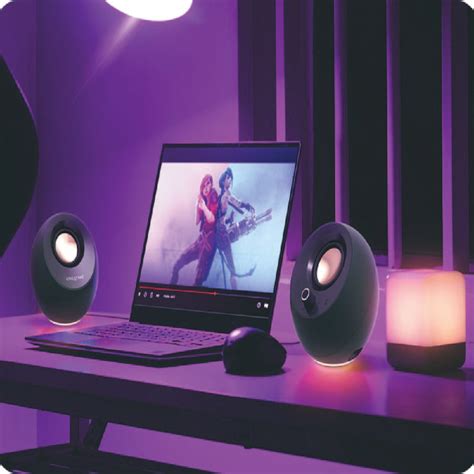
Out of the box, the Creative Pebble Pro makes a clear promise: small footprint, clean lines, and a desk-friendly presence. The reviewer notes that the speakers occupy very little horizontal space and have a minimal visual profile that blends into a home office or living room setup without drawing attention. Controls and inputs are intentionally modest—enough for most desktop and living-room scenarios without competing with the rest of the desk for attention.
Build quality feels appropriate for the product category. The materials and finish are not premium to the point of luxury, but they are solid and free of distracting creaks or cheap-feeling plastics. For buyers who care about aesthetics, the Pebble Pro’s compact cylindrical-slab housing and restrained styling are a positive.
Connectivity and Practical Setup
One of the reasons the reviewer switched was convenience. The Pebble Pro offers common desktop-friendly inputs—plug-and-play wired connections that work well with laptops, desktops, and monitors. Setup was straightforward: the reviewer connected via the primary digital input for the cleanest signal path and used the analogue input for a secondary device. The compact size simplified positioning—angled drivers and flexible placement allowed the reviewer to mount the speakers at a comfortable near-field listening angle without a lot of trial and error.
For buyers who care about cable management, desk real estate, and reducing the number of dongles, the Pebble Pro is an attractive option. It removes the need for a dedicated headphone amp in many casual listening scenarios and offers a shared listening experience that headphones do not.
Sound: Signature, Clarity, and Bass
Sound quality is the heart of any speaker review. The reviewer’s experience with the Pebble Pro is characterized by a sound signature that favors clarity and midrange definition. Vocals and acoustic instruments come through with good presence and intelligibility—one of the strengths for podcast listeners, video conferencing, and vocal-centric music.
Detail and separation in the midrange and upper midrange are commendable for the speaker size. For listeners who prioritize clear dialogue in movies and video calls, the Pebble Pro provides a tangible improvement over tiny laptop speakers and many multimedia speaker sets in the same compact category.
Low-frequency performance is where trade-offs become apparent. The Pebble Pro’s compact drivers and small enclosure mean the deepest bass is limited compared with bookshelf speakers or a system with a dedicated subwoofer. The reviewer found that electronic music with heavy sub-bass and action movie soundtracks lacked the visceral weight they delivered from a larger system. However, the bass that is present tends to be controlled rather than boomy, which helps avoid muddiness at moderate listening levels.
For near-field music listening, office use, streaming, and light gaming, the Pebble Pro’s bass is adequate. For listeners whose priority is deep, room-rattling bass at party-level volumes, the Pebble Pro is not the right tool on its own; it works better paired with a subwoofer or used in environments where deep bass is not essential.
Imaging, Soundstage, and Dynamics
One pleasant surprise for the reviewer was the sense of imaging. Despite the small form factor, the speakers create a believable stereo image when positioned properly on the desk and aimed toward the listener. Instruments and vocal placement in mixes feel reasonably well-defined, particularly in acoustic, indie, and vocal-focused recordings.
Looking for the best Audio & Headphones deals on Amazon?
See Deals →Dynamics—how the speakers handle sudden changes in volume and energy—are limited by the drivers and amplifier headroom. The reviewer noticed some compression at very high playback levels, but in typical desktop listening situations the Pebble Pro maintains decent punch and transient response. This makes the speakers versatile for everyday use without frequent distortion concerns when listening at moderate volumes.
Everyday Use Cases
The practical value of any speaker depends on how it performs in real-world use. The reviewer used the Pebble Pro in several common scenarios:
- Work from home and video calls: Clear speech reproduction improved comprehension during meetings and reduced the need to rely on headphones for the entire day.
- Streaming music and background listening: The speakers provided pleasant background sound while working, with vocals and midrange instruments clearly audible.
- Gaming: The Pebble Pro gave accurate positional cues for many games, though players seeking thunderous explosions may miss deeper lows.
- Light home theater: For TV shows and dialogue-heavy films, the speakers performed well; they were less effective for blockbuster action mixes without an added subwoofer.
Software, Controls, and Adjustability
Some users expect companion software or advanced EQ options. The reviewer observed that the Pebble Pro keeps controls simple, with physical volume and input selection accessible on the unit or via inline controls. There was no need for a complex software suite for everyday listening, and the simplicity reduces the learning curve for non-technical users.
Power users who want granular EQ or room correction may need to use the operating system’s audio settings or a third-party equalizer. The reviewer suggests that buyers check whether they will need software tuning for their preferred music genres before purchasing.
Durability and Long-Term Use
Over several weeks of use, the Pebble Pro showed no signs of hardware fatigue. For everyday desktop usage—on a desk under a monitor, in a small living room, or in a shared workspace—the speakers held up well. The reviewer recommends modest care: avoid placing them in direct sunlight for extended periods and keep liquids away from the control region to prevent accidental damage.
Value and Who Should Buy It
Value is relative to expectations. The Pebble Pro is aimed at buyers who want better sound than laptop speakers without the footprint and complexity of a full bookshelf system. It is particularly well-suited for:
- People who work from a desk and want clearer voice reproduction for calls and conferencing.
- Apartment dwellers who need small speakers that don’t overwhelm the room.
- Users who want a shared listening experience without the isolation of headphones.
- Gamers who prioritize positional accuracy and clarity over heavy bass impact.
On the other hand, buyers who prioritize very deep bass, highest-possible dynamics for music, or hi-fi-grade components should consider bookshelf speakers or a speaker+subwoofer combination instead of the Pebble Pro alone.
Pros & Cons
- Pros:
- Compact, desk-friendly design that fits small spaces easily.
- Clear midrange and vocal clarity that benefit podcasts, calls, and vocal-centric music.
- Simple setup and multiple common inputs for flexible connectivity.
- Good imaging for near-field listening, creating a convincing stereo scene from a small footprint.
- Controlled bass that avoids muddiness at moderate volumes.
- Cons:
- Limited deep-bass extension; not a substitute for a subwoofer in bass-heavy usage.
- Restricted dynamics at very high volumes compared with larger speaker systems.
- Minimal onboard EQ or advanced software controls for users who want to tailor the sound extensively.
- Not intended as a dedicated home theater or party speaker where high SPL and room-filling low end are required.
Comparison Table
| Feature | Creative Pebble Pro | Original Creative Pebble | Small Bookshelf Speakers (Typical) |
|---|---|---|---|
| Size & Footprint | Very compact; designed for desks | Smaller; highly space-efficient | Larger; require dedicated surfaces |
| Connectivity | Multiple desk-friendly inputs (digital & analogue) | Primarily analogue/USB in older models | RCA, optical, Bluetooth (varies) |
| Low-frequency performance | Controlled but limited bass; best near-field | More limited bass than Pro | Better deep bass, especially with subwoofer |
| Intended use | Desktop, WFH, casual listening, gaming | Desktop, casual multimedia | Nearfield listening, small rooms, hi-fi setups |
| Value proposition | Strong for clarity and convenience | Very budget-friendly option | Higher fidelity, greater cost |
Buying Guide: What to Consider Before Switching
When evaluating whether the Creative Pebble Pro is the right move, the reviewer recommends walking through a few practical checks. These will help align expectations with real-world performance and ensure the purchase meets the user's needs.
1. Room and Volume Requirements
Consider where the speakers will live. The Pebble Pro excels in near-field environments—desks, small bedrooms, and compact living spaces. If the plan is to fill a large room or host gatherings where loud, chest-thumping bass is desired, a larger speaker system with a subwoofer is a better choice.
Looking for the best Audio & Headphones deals on Amazon?
View Offers →2. Listening Habits and Preferred Genres
If listening habits revolve around podcasts, video calls, indie, acoustic, and vocal-forward music, the Pebble Pro will likely satisfy. If the collection leans heavily toward sub-bass-driven electronic music or orchestral film scores that rely on depth and scale, consider a system with more low-end capability.
3. Connectivity Needs and Device Compatibility
Confirm the inputs required for daily use. The Pebble Pro supports common digital and analogue connections that fit most desktops, laptops, and TVs. If the user needs advanced wireless features, multi-room capability, or a specific proprietary connection, verify compatibility first.
4. Space and Placement
Measure the available desk or shelf space and think about speaker placement. Small speakers still benefit from correct positioning: toe-in, sufficient distance from reflective surfaces, and a clear line to the listener. The Pebble Pro’s size makes it forgiving, but proper placement improves stereo imaging and clarity.
5. Expandability
Decide whether the system should grow. Some buyers prefer to add a subwoofer later. The Pebble Pro can be a flexible starting point for a modest audio system if the necessary outputs or auxiliary options are available for expansion.
6. Budget and Value Priorities
Budget-conscious buyers should balance up-front cost with anticipated longevity and satisfaction. The Pebble Pro represents a middle-ground solution: better sound and features than ultra-budget USB speakers, without the investment required for a full hi-fi setup. Consider whether sound quality, aesthetics, or convenience is the priority and choose accordingly.
Final Notes From the Switch
After switching to the Creative Pebble Pro, the reviewer found the speakers simplified daily life in several ways. Tasks that previously required headphones—video calls, collaborative listening, background music while working—became less cumbersome, and the desk uncluttered. The moral of the experience: a compact, well-balanced speaker system can significantly improve everyday audio without the complexity or space demands of larger setups.
There are compromises—chiefly, the limited deep bass and headroom at very loud levels—but these are expected trade-offs for a compact form factor. For the vast majority of desktop users who want clearer speech, better imaging, and an unobtrusive desktop companion, the Pebble Pro is a practical and pleasing choice.
Conclusion
The Creative Pebble Pro is not a magic wand that turns every small space into a concert hall, but it is a thoughtfully designed, user-friendly speaker system that improves on laptop speakers and many low-end multimedia options. It provides clear midrange performance, good imaging for near-field listening, and a small footprint that appeals to people working in constrained spaces. Buyers should weigh their need for deep bass and very high volume against the convenience and clarity the Pebble Pro delivers. For everyday desktop listening, work-from-home setups, and shared media consumption in small rooms, the Pebble Pro is a solid, practical upgrade that delivers tangible, real-world benefits.