Don't Buy Until You Read This: Framework Desktop vs Canon Megatank Pixma G3290
Introduction
Choosing the right hardware for a home office or small business is rarely a one-size-fits-all decision. Two very different products often end up on the same shopping list: a compact, modular desktop like the Framework Desktop and a high-capacity, refillable inkjet such as the Canon Megatank Pixma G3290. On paper these are unrelated—the former is compute hardware, the latter a printer—but both can be central to an efficient workspace. This comparison helps readers understand practical trade-offs, long-term ownership costs, and which product suits which use cases so they can make an informed purchase decision.
How to read this guide
This article compares the Framework Desktop and the Canon Megatank Pixma G3290 across real-world concerns: performance for daily tasks, total cost of ownership, maintenance, footprint, and repairability. It then provides focused pros and cons for each device, followed by a concise buying guide highlighting the questions buyers should ask before spending money.
Product overviews and detailed analysis
Framework Desktop — modular computing built for longevity
The Framework Desktop is a relatively new entrant from a company best known for modular laptops. It brings the same repair-first philosophy to a desktop form factor: parts are designed to be replaced, upgraded, and swapped with minimal friction. For buyers who want a lifespan measured in years rather than replacement cycles, a modular desktop is compelling.
Real-world use cases where the Framework Desktop stands out include:
- Power users who periodically upgrade CPU, GPU, or storage without buying a whole new machine.
- Home offices and small studios that need serviceable systems to minimize downtime—especially where local repair resources exist.
- Users who prefer open hardware and want good Linux compatibility or to install alternate operating systems.
Practical considerations:
Looking for the best Laptops & Computers deals on Amazon?
Shop Amazon →- Build and upgrade model: The Framework Desktop emphasizes modularity—tool-accessible parts, standardized connectors, and an ethos of repairability. That makes incremental upgrades cheaper and less wasteful.
- Performance variability: Performance depends entirely on the chosen components. The platform typically supports a range of modern desktop-class CPUs and discrete graphics cards (depending on the chosen chassis and power supply), so buyers can tailor the machine to tasks such as software development, media editing, or light gaming.
- Thermals and acoustics: Compact or modular designs can trade thermal headroom for repairability. In practice, cooling depends on selected components; choosing a higher-end GPU or CPU will require attention to cooling and noise levels.
- Software and driver support: Framework's approach tends to favor transparency and community support. That often translates into decent Linux compatibility and firmware tools, but buyers should verify specific component compatibility for niche workloads.
- Initial cost vs long-term value: Upfront cost can be higher than a comparably specced mainstream prebuilt desktop because of the flexibility and premium on repairable parts. However, total cost of ownership can be lower if the owner upgrades parts over time rather than replacing the entire system.
Canon Megatank Pixma G3290 — low-cost, high-volume inkjet
The Canon MegaTank family is designed to address one of the longest-standing problems in inkjet printing: high replacement ink costs. The Pixma G-series offers refillable pigment/dye tanks and high-yield bottles to reduce per-page costs, making them attractive in environments that print frequently.
Typical real-world use cases:
- Small businesses and home offices that print dozens to a few hundred pages per week and want predictable running costs.
- Students and families that combine document printing with occasional photo printing.
- Environments where a low total cost per page matters more than the absolute fastest print speed or the highest-end photo accuracy.
Practical considerations:
- Running cost: Refillable tanks significantly reduce the ongoing cost of printing compared with cartridge-based inkjets. For moderate-to-high monthly volumes, the savings accumulate quickly.
- Print quality: For standard documents and casual photos, MegaTank printers typically deliver satisfactory color and text quality. They are not, however, a substitute for lab-grade photo printers designed for professional photographers.
- Speed and duty cycle: Inkjet print speeds are moderate; heavy production environments may be better served by laser printers for high-volume monochrome work. For color graphics and photos, inkjets strike a reasonable balance.
- Maintenance: Refillable systems require attention to proper refilling technique and occasional head cleaning. Using manufacturer-recommended inks usually yields the best longevity.
- Connectivity and features: Models like the G3290 commonly include wireless printing, mobile app support, and scanning—features that simplify multi-device workflows in modern offices.
Pros & Cons
Framework Desktop
- Pros
- Exceptional repairability and upgrade path — components can be replaced or upgraded individually.
- Potentially lower lifetime cost thanks to upgrades instead of full replacement.
- Good for users who value control over hardware choices and compatibility with alternative OSes.
- Community-driven support and documentation encourage DIY repairs.
- Cons
- Higher initial cost for a flexible platform compared with some sealed-system prebuilts.
- Performance depends on chosen components—buyers can under-spec for their intended tasks if not careful.
- Smaller aftermarket of verified components and accessories relative to mainstream OEM ecosystems.
- Compact modular designs may require attention to cooling when configuring high-power parts.
Canon Megatank Pixma G3290
- Pros
- Very low cost per page thanks to high-capacity refillable ink tanks.
- Good balance of text and color print quality for everyday use.
- All-in-one functionality (print, scan, copy) covers common office needs.
- Compact footprint suitable for small desks and home offices.
- Cons
- Print speeds and duty cycles are limited compared with office laser printers for heavy mono workloads.
- Refillable systems require care when refilling and occasional head maintenance to prevent clogging.
- Photographic output is decent but not as color-accurate or durable as specialized photo printers.
- Ongoing cost and convenience depend on buying proper refill bottles and following manufacturer guidance.
Side-by-side comparison
| Feature | Framework Desktop | Canon Megatank Pixma G3290 |
|---|---|---|
| Primary purpose | General-purpose modular desktop for computing, development, media work | All-in-one inkjet for document and color printing with refillable tanks |
| Best for | Users who value upgradability, repairability, and long-term ownership | Users who print frequently and want a low cost per page |
| Upfront cost | Moderate to high (depends on selected CPU/GPU/RAM) | Low to moderate (printer hardware is relatively inexpensive) |
| Ongoing cost | Low if upgraded over time; component replacement costs apply | Very low per-page cost due to refillable tanks |
| Repairability | Very high — designed for part swaps and repairs | Moderate — user-serviceable ink tanks, but printheads and electronics are more fragile |
| Footprint | Varies (small form factor options exist; depends on configuration) | Small desktop footprint designed for home/office desks |
| Connectivity | Depends on motherboard and expansion (Ethernet, Wi‑Fi, USB, Thunderbolt options) | Typical: USB and wireless printing; mobile app support |
| Suitability for heavy workloads | Excellent if configured with the right components and cooling | Not ideal for sustained high-volume monochrome printing compared with lasers |
| Noise and thermals | Depends on chosen CPU/GPU and cooling; can be louder with high-power GPUs | Quiet during idle; printing produces moderate mechanical noise |
Buying guide — what matters before you purchase
Questions to ask for the desktop buyer
- What will the machine actually do? Identify primary tasks—coding, video editing, 3D work, or general office tasks. Choose CPU, GPU, and storage proportions accordingly.
- How important is upgradeability? If longevity and the ability to incrementally upgrade are priorities, a modular desktop pays off. If the buyer prefers plug-and-play convenience, a mainstream prebuilt may be less complex.
- Does the buyer plan to run alternative operating systems? Verify driver support for chosen components if Linux or other OSes are important.
- Space and cooling constraints: Confirm available desk/room space and ensure the selected chassis and cooling solution can handle the chosen components.
- Warranty and support: Understand what the vendor covers and what parts the community or third-party repair shops can service.
- Power and acoustics: Decide if noisy fans during heavy workloads are acceptable. Select components and cooling profiles accordingly.
Questions to ask for the printer buyer
- Monthly print volume: Estimate pages per month. High mono volumes may favor a laser; mixed color and photo output often keep inkjet as the better choice.
- Cost per page: Look at the manufacturer’s yield estimates for standard and color pages and calculate ongoing costs. MegaTank designs typically lower per-page costs significantly.
- Print quality needs: Casual photos and documents are well-served by MegaTank printers; professional photo work will need a dedicated photo printer.
- Connectivity and workflows: Confirm mobile printing, network shares, scanning to cloud or email functions, and compatibility with the buyer’s devices.
- Maintenance and reliability: Refillable systems demand careful refilling and occasional nozzle maintenance. Consider whether the user is comfortable performing these tasks or would rather replace cartridges.
- Replacement supplies: Verify local availability of genuine refill bottles and the cost/packaging sizes that match expected volume.
Practical evaluation checklist
- Read user reviews focusing on durability and support experiences, not just initial impressions.
- Check community forums for common upgrade paths (desktop) and head-clogging or maintenance reports (printer).
- For the desktop: confirm the vendor’s replacement-parts policy and the availability of common components locally.
- For the printer: test sample prints when possible; inspect text sharpness and color consistency on real office documents.
- Consider total workspace ergonomics—size, noise, and cable management for a desktop; footprint and paper handling for the printer.
Real-world scenarios and recommendations
Scenario 1: A freelance web developer working from a small apartment needs a reliable machine and occasional printing. The Framework Desktop suits someone who values a repairable platform and the ability to upgrade storage and memory as projects grow. A compact MegaTank printer is sensible for printing contracts, invoices, and occasional client materials—especially if monthly volume is moderate.
Scenario 2: A small photography studio that prints brochures and proofs might prefer higher-quality photo printers for color-critical work. The MegaTank printer can still be useful for administrative printing, but for final proofs and gallery prints a specialized photo printer is recommended. The Framework Desktop, when configured with a color-calibrated monitor and a capable GPU, can handle image processing workflows.
Discover deals on Laptops & Computers — updated daily.
Browse Now →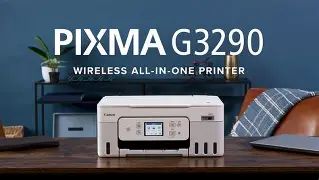
Scenario 3: A small business with heavy black-and-white output (invoices, receipts) might find laser printers cheaper per month even if MegaTank inkjets reduce color and mixed-page costs. The Framework Desktop remains a flexible choice for running business applications and bookkeeping tools, particularly when uptime and ease of repair matter.
Conclusion
Framework Desktop and the Canon Megatank Pixma G3290 address two different but complementary needs in a modern workspace: long-term, repairable compute versus economical, high-volume printing. The Framework Desktop is compelling for buyers who prioritize control, upgradeability, and long-term value—especially those who are comfortable choosing components and tuning cooling and acoustics. The Canon Megatank Pixma G3290 is an attractive option for those who want low ongoing printing costs and reliable document and color output without the recurring expense of cartridges.
Ultimately, the right choice depends on responsibilities and priorities. If a buyer needs a machine that can evolve with changing workflows, the modular desktop is worth the initial investment. If frequent printing is a daily task and consumable costs are a major budget line, a MegaTank-style printer will deliver measurable savings. For many home offices, the sensible combination is a durable, serviceable desktop paired with a refillable inkjet for a balanced mix of performance and predictable running costs.